Utthita Hasta Padangustasana

Utthita Hasta Padangustasana

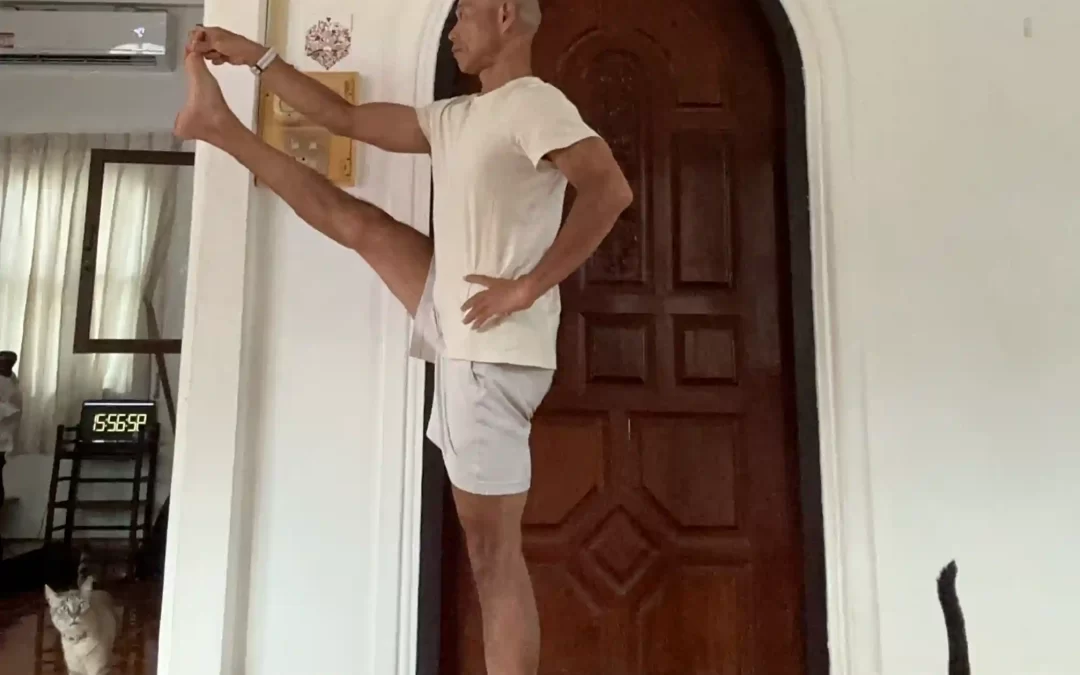
This is a one-legged balancing posture that requires a good sense of balance and hip flexibility.


Press the foot on the ground as strong as you can!

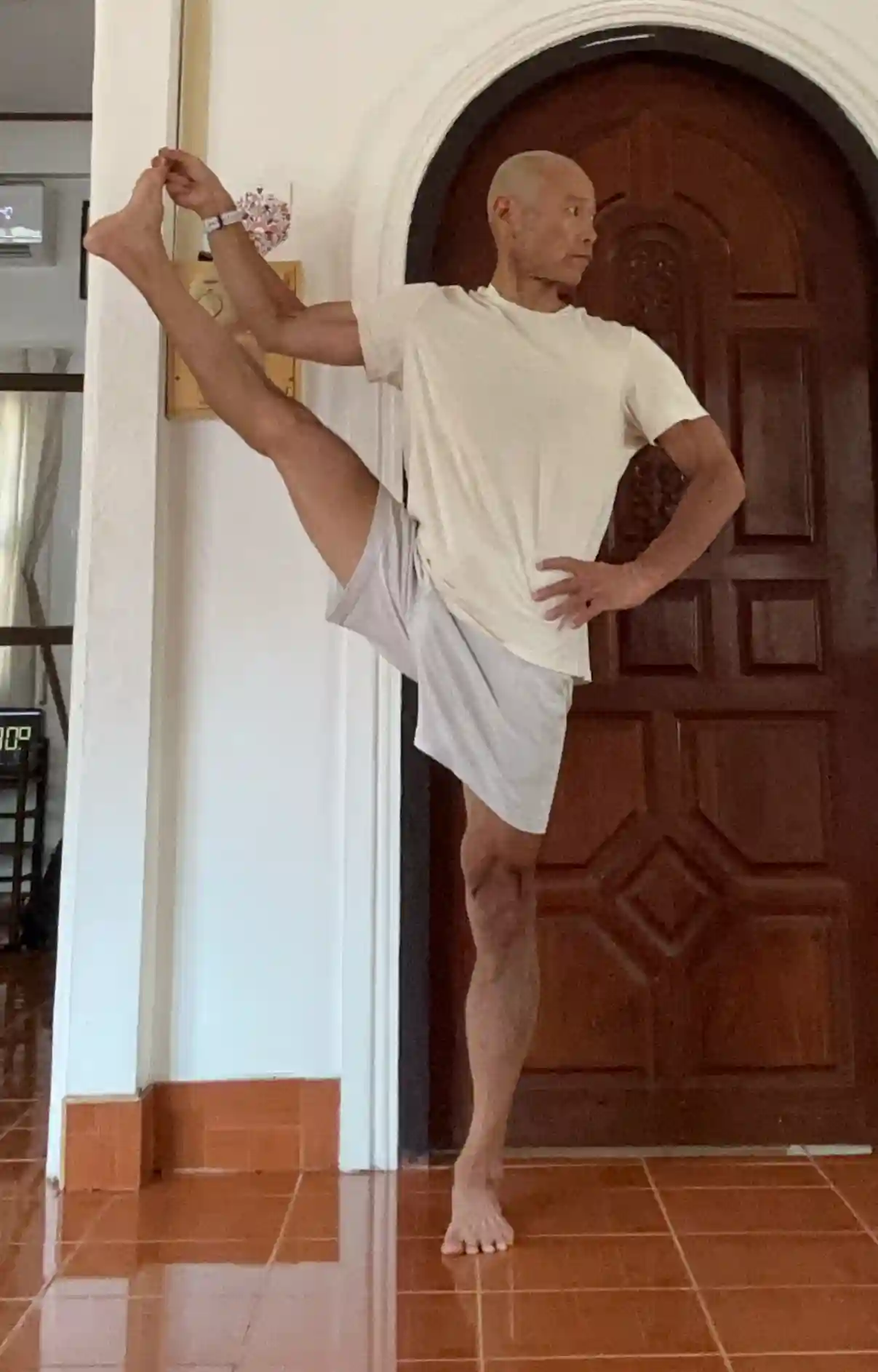
Utthita Hasta Padangustasana A

1. Stand on the mat in Tadasana(Mountain pose).

2. Raise one leg and grab the big toe with the index finger and the middle finger on the same side.

3. Both legs should be adducted and both thighs are rotated externally. The hips should be tighten and stablised to pull the legs into the hips firmly.

4.  Straighten and lengthen the spine, and engage the core.
 

Utthita Hasta Padangustasana B

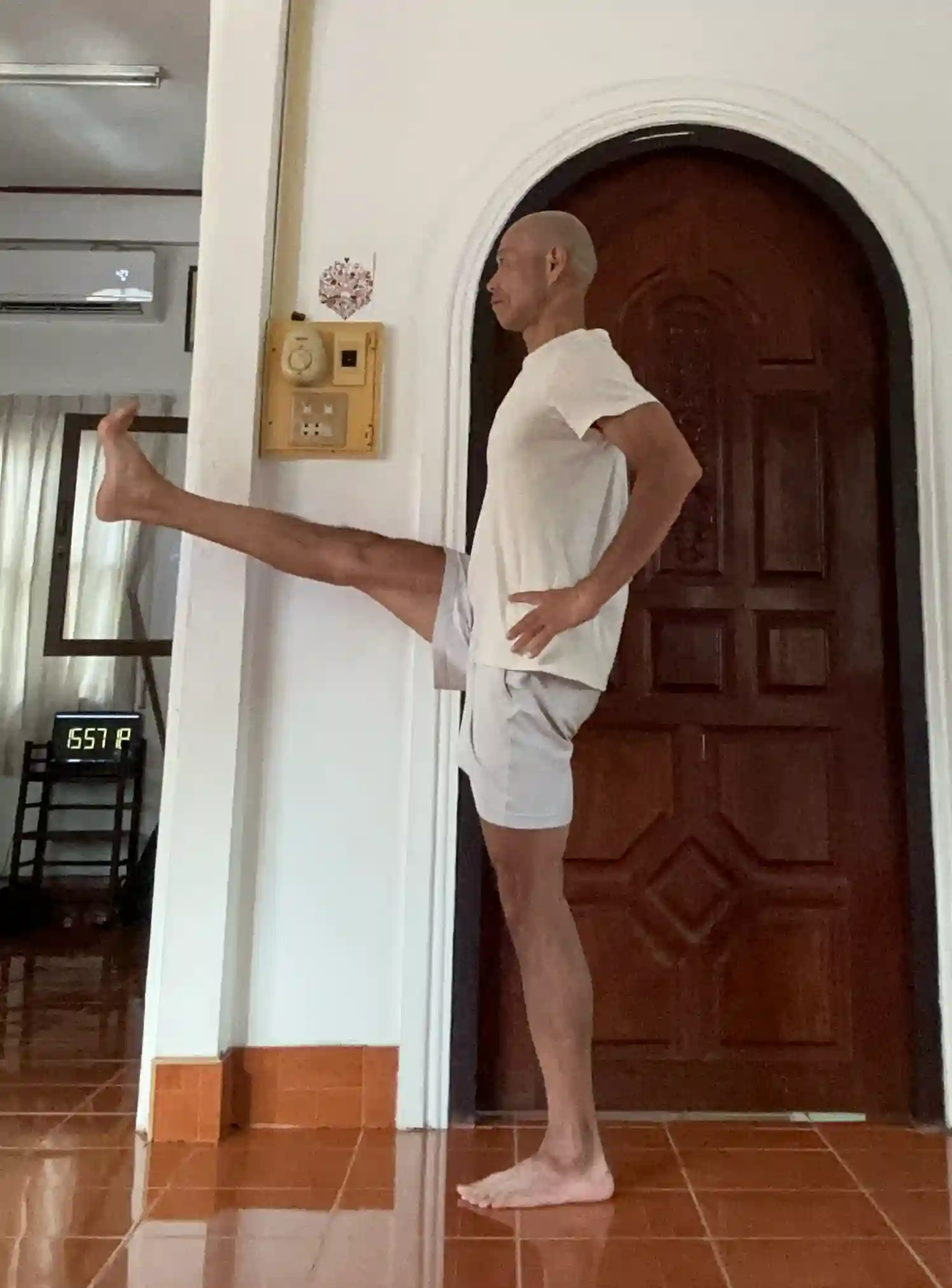
1. From Utthita Hasta Padangustasana A, bring the foot sideway to keep grabbing the big toe with the fingers.

2. The leg on the mat should be adducted and rotated the thigh externally, other leg should be abducted and rotated the thigh externally. The hips are tightened and stabilized to pull the legs into the hips firmly.

3. Straighten and lengthen the spine, and engage the core.
 

Utthita Hasta Padangustasana C

1. From Utthita Hasta Padangudtasana A, put the hands on the waist.

2. Both legs should be adducted and both thighs are rotated externally. The hips should be tighten and stablised to pull the legs into the hips firmly.

3. Straighten and lengthen the spine, and engage the core.
 

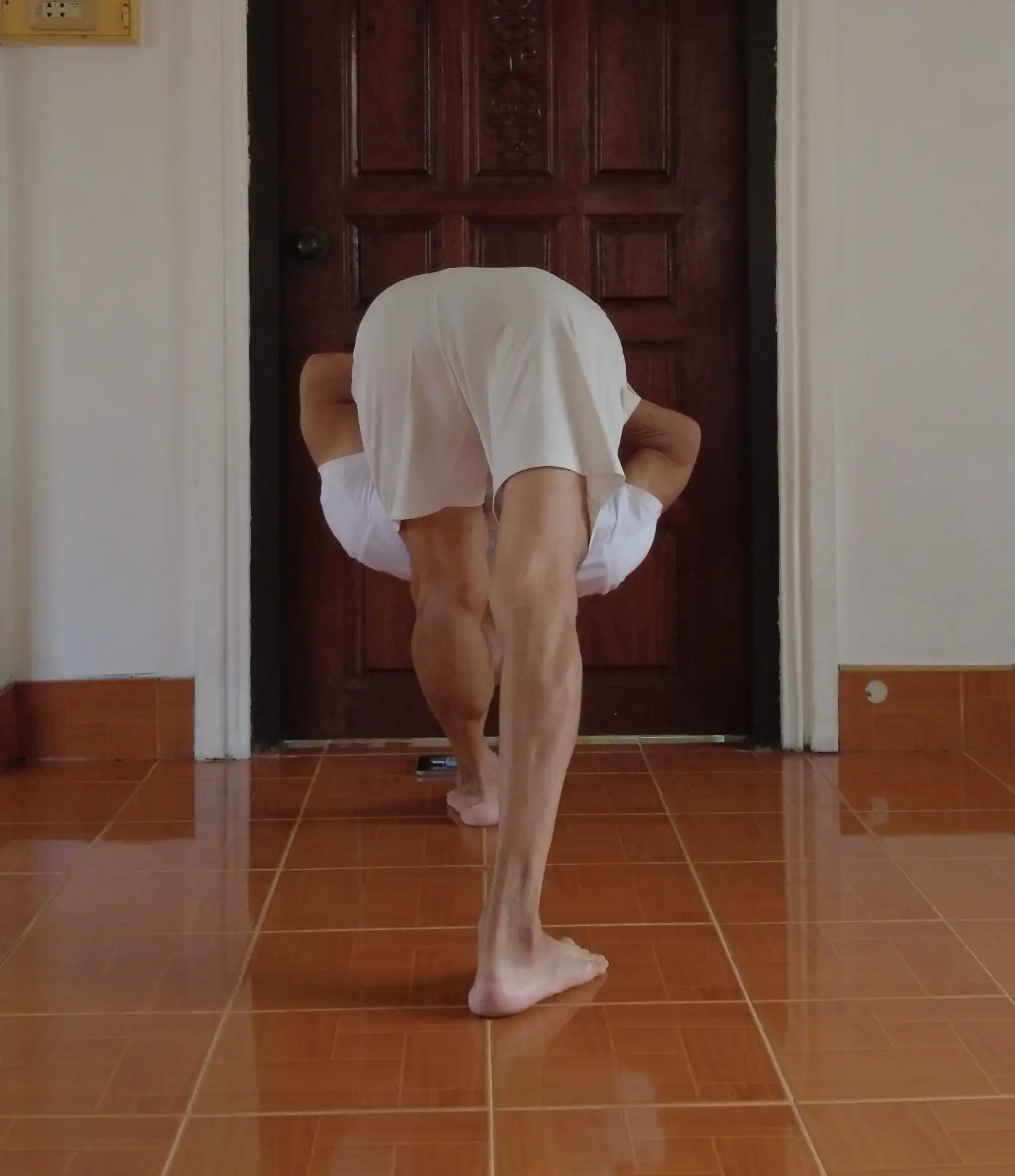
Parsvottanasana

Parsvottanasana

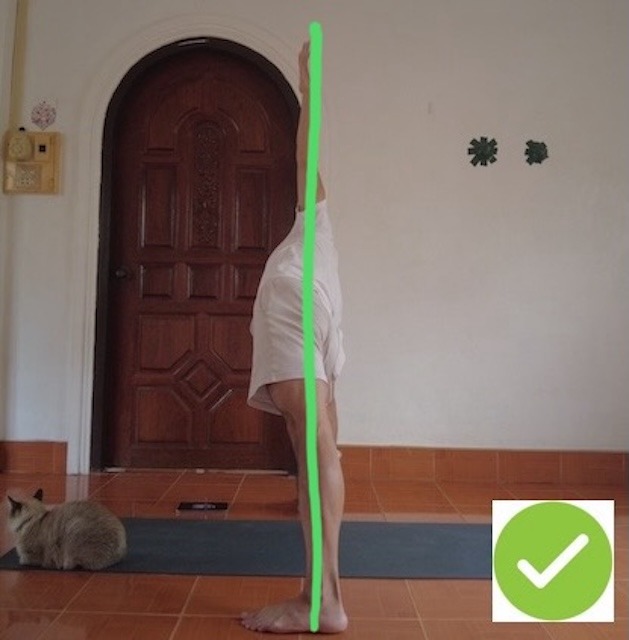
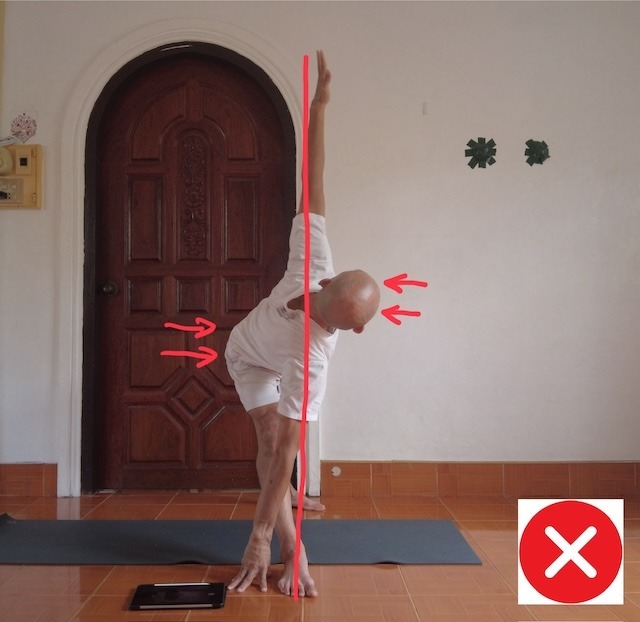
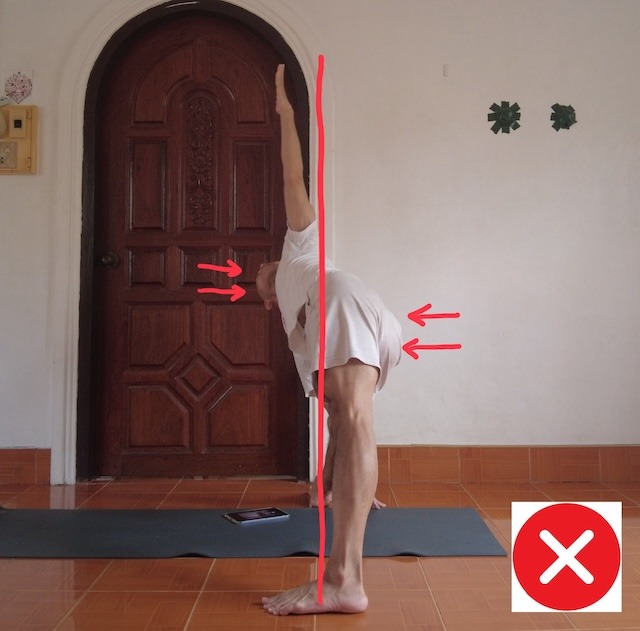
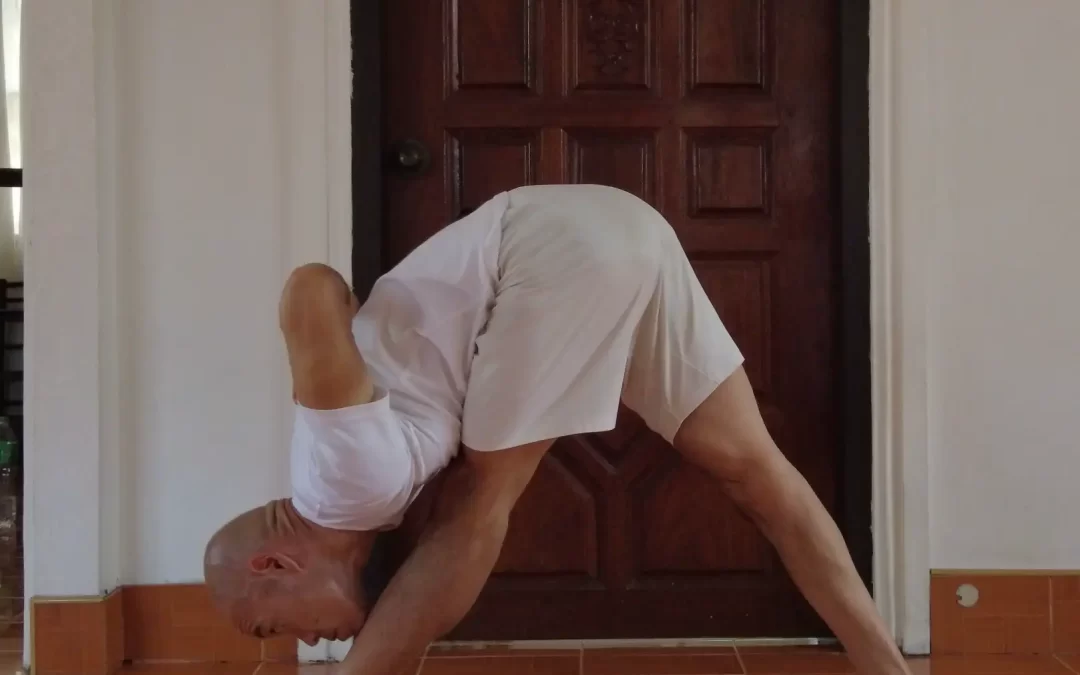
This posture is a forward-bent posture with the legs vertically open.


Basics of any standing postures


1. connect the front foot and the back foot to press each other, as you tuck the legs into the hips firmly and keep the hips stable, so it is counterbalanced and the posture should be more stable and more deepened.

2. Try to shift the weight onto the back leg as much as possible.

3. the tail bone, the spine, the neck and the head should be aligned and lengthened.

4. Engage the psoas.


As following the basics


1. Put the palms behind the back firmly, and open and lift the chest.

2. Separate the feet a leg width apart, keep the front foot pointing straight ahead, turn the back toe at 45 degrees against the front foot, and align the back heel with the front foot.

3. The front leg is adducted and externally rotated, the back leg is adducted and externally rotated.

4. Keep the hips squere. keep the weight on the strong back leg as much as possible.

5. As you lengthen the spine and the neck, bring the chin toward the sin. Keep your both leg adducted, and keep the back leg rotated externally, however, the deeper bend the body forward, the deeper front leg rotated internally.

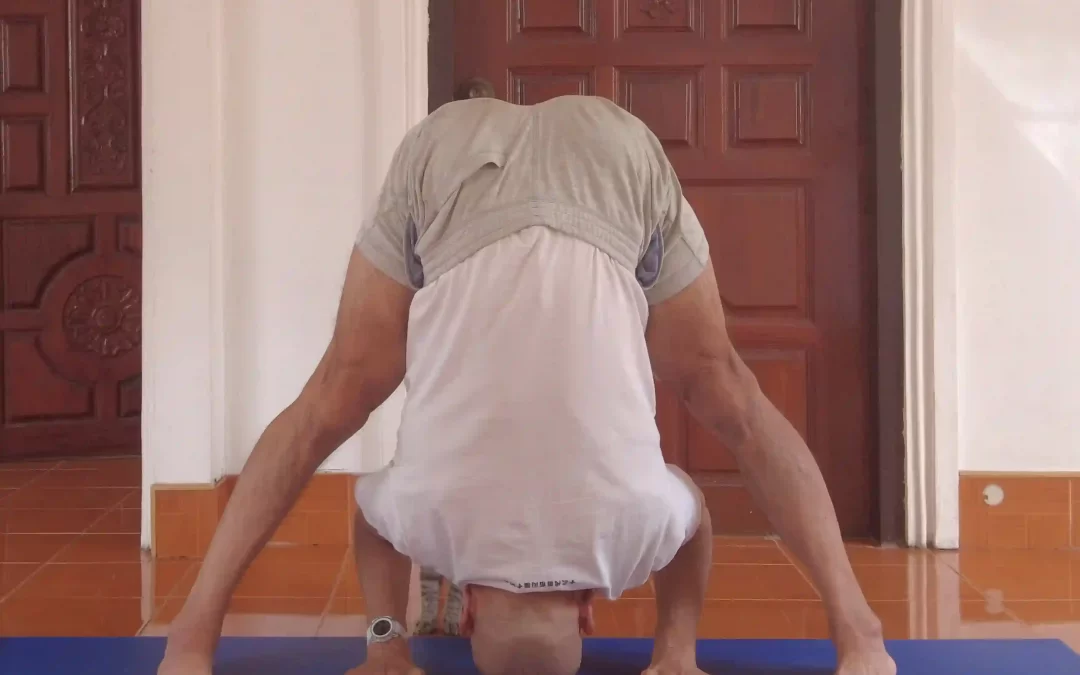
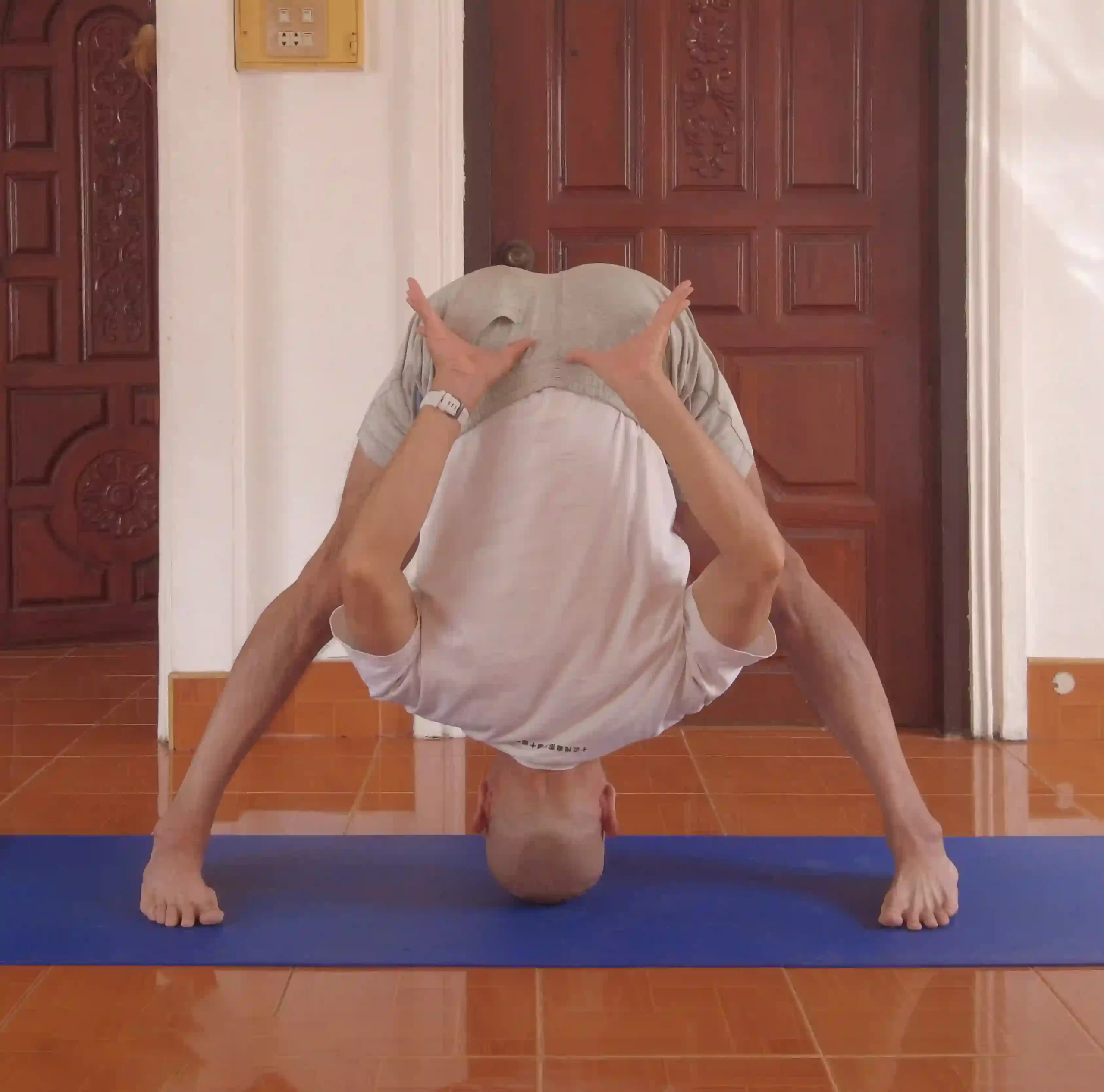
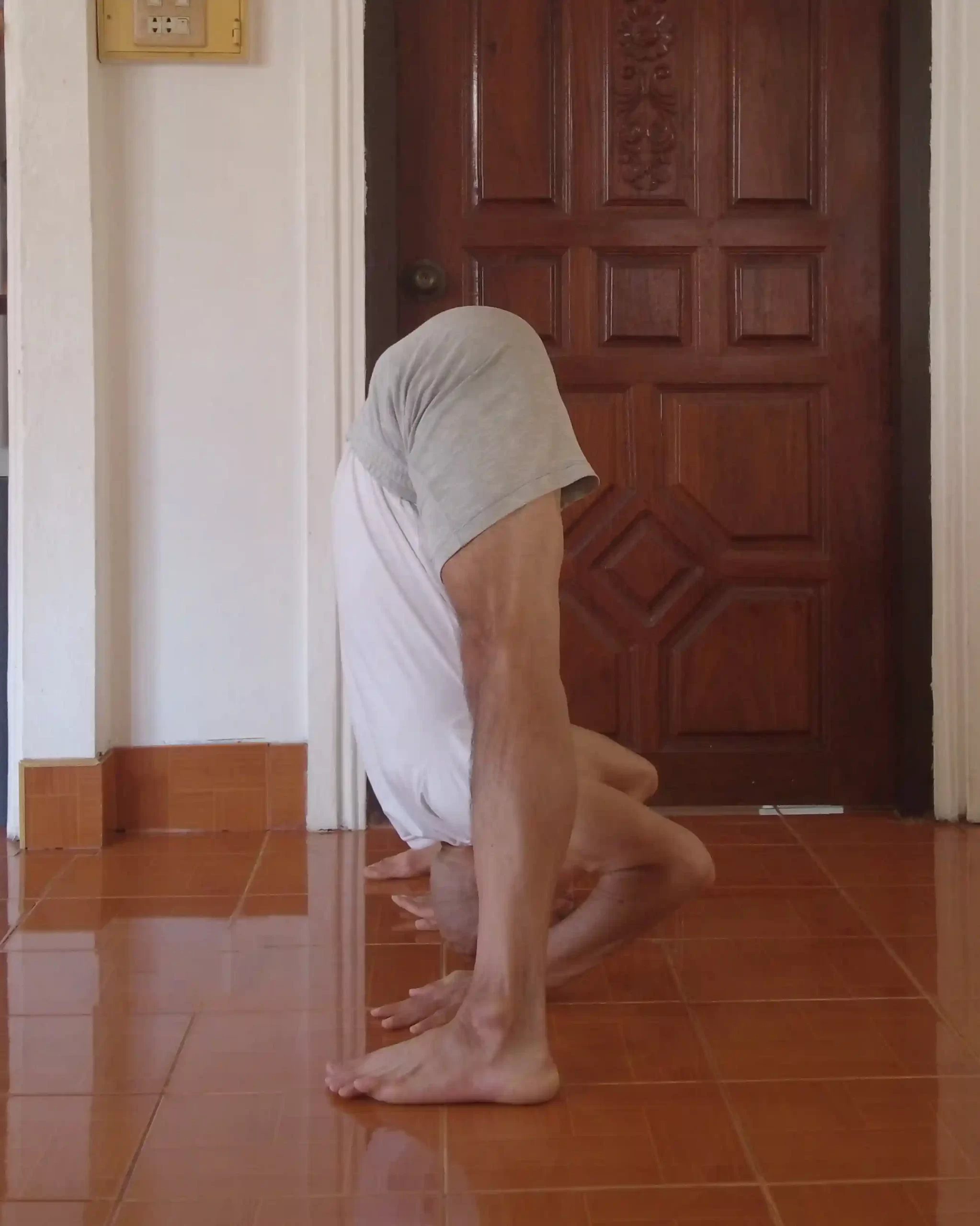
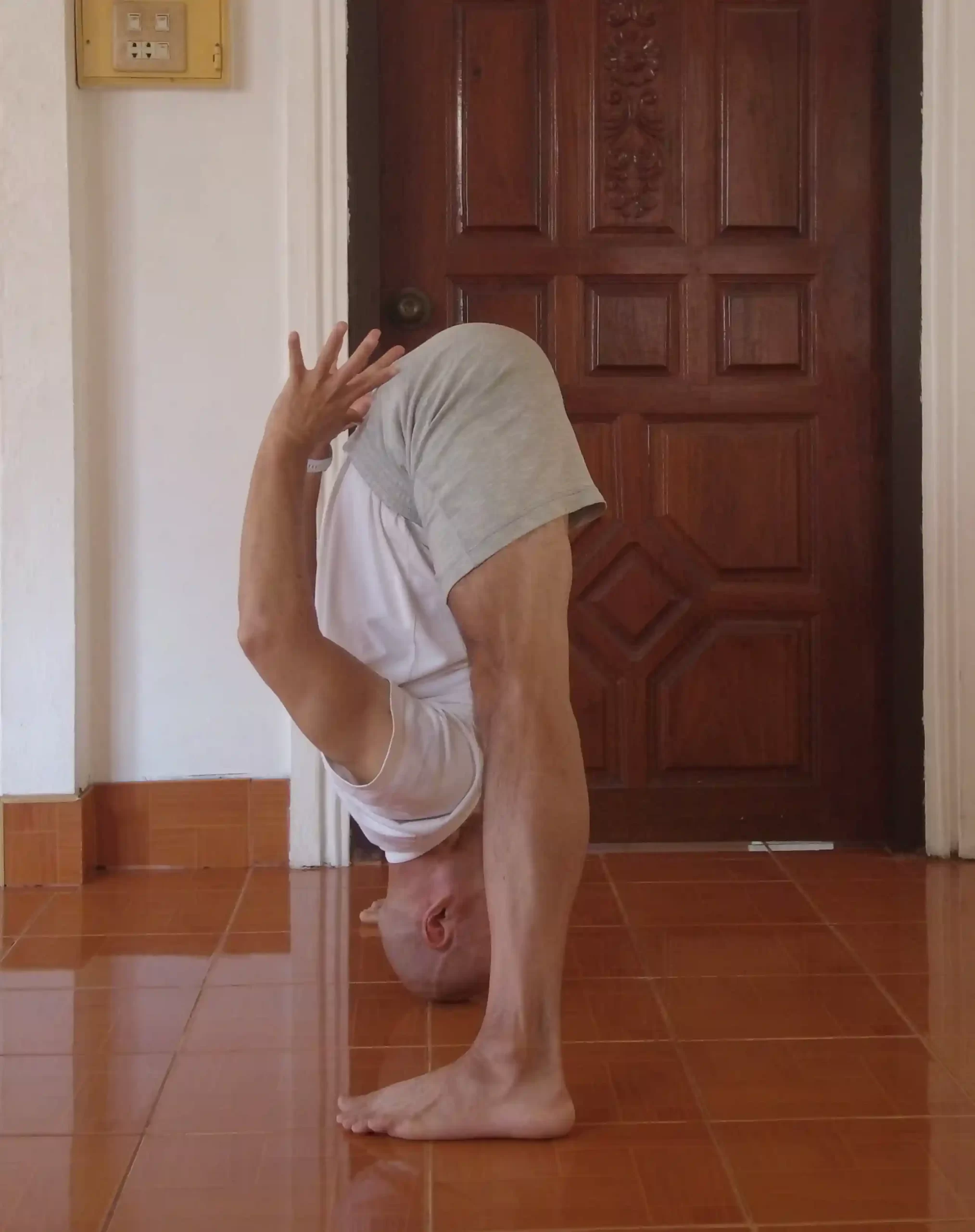
Prasarita Padottanasana

Prasarita Padottanasana

Forward bending posture with legs spread.

Whether the legs are spread or closed, forward bending is important and fundamental to yoga postures.

Through forward bending postures, you will learn how to tilt the pelvis forward and move the hip joints in accordance with the psoas muscles, which will allow you to try many other poses.

People who cannot hold downward facing dog for at least 5 minuets need to improve your forward bending postures. Otherwise, you will not be able to step forward.

Don’t neglect the basics, or you will never improve your postures, or you just will be better at cheating on postures and movements.


1. Spread the legs to the appropriate width, depending on leg length, torso length and body proportions.

2. The toes are slightly inward or the feet are kept parallel.

3. It does not matter how your head is closer to the mat, try not to round the back anyway. Focus on the angle of the pelvis which should be tilted forward.


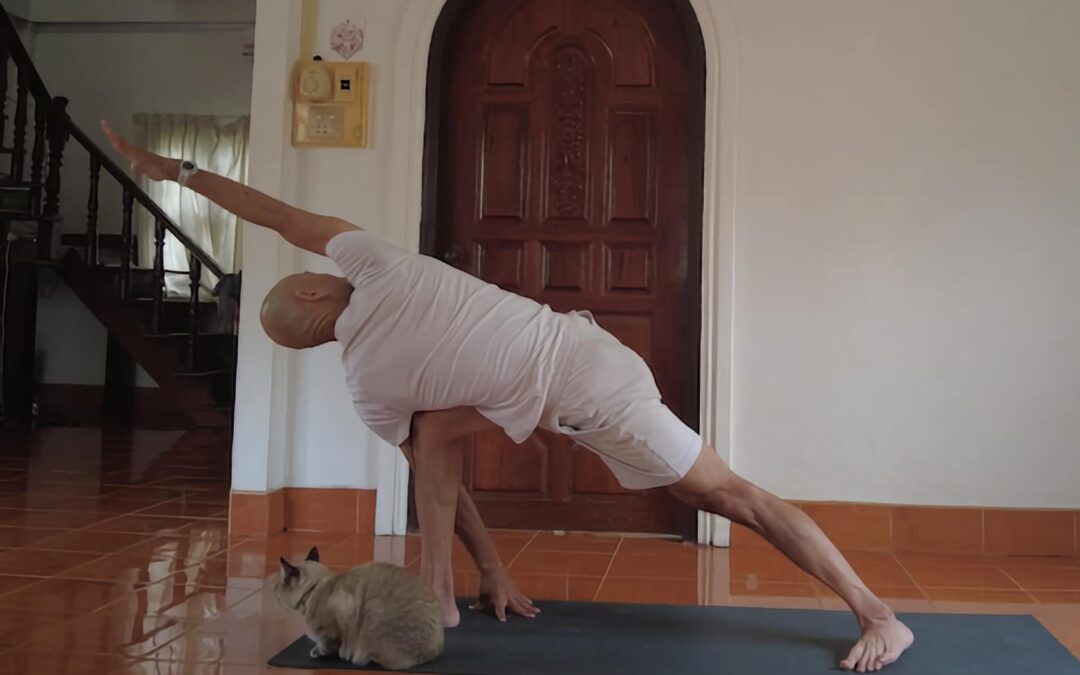
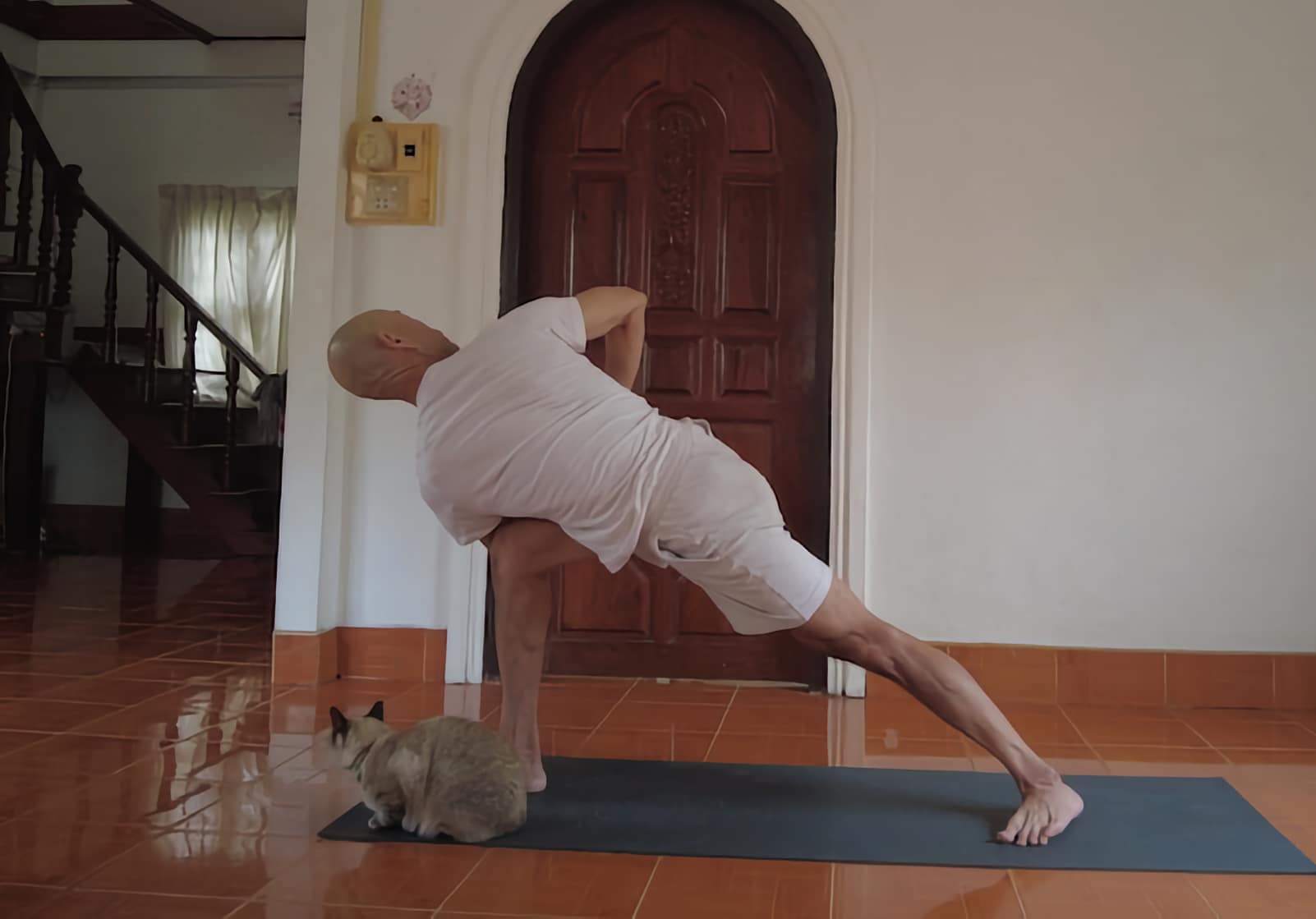
Parivrtta Parsvakonasana

Parivrtta Parsvakonasana

This posture requires strong legs, strong core, and flexilibility of shoulders and hips. It’s a challenging posture for beginners, so you can try a modified one as shown below.


Basics of any standing postures

1. connect the front foot and the back foot to press each other, as you tuck the legs into the hips firmly and keep the hips stable, so it is counterbalanced and the posture should be more stable and more deepened.

2. Try to shift the weight onto the back leg as much as possible.

3. the tail bone, the spine, the neck and the head should be aligned and lengthened.

4. Engage the psoas.


As follow the basic

1. Separate the feet a leg width apart, Align the front foot with the back heal. The front foot should be straight forward, the back toe should be inward to keep the back heal onto the mat firmly.

2. The hips should be squared, The front shin should be vertical against the floor. The back leg should be stretched out. The front thigh is adducted and externally rotated, The back thigh is adducted and externally rotated.

3. (On the side as shown above)Twist the body to right side, press the left upper arm firmly on to the right thigh. Align the spine with the back leg.

(Modified one)Put the palms together, align the forearms, and keep the forearms vertical against the floor. Both upper arms are abducted and externally rotated. Look behind or upwards.

(Original one) As you press the left upper arm on to the right thigh firmly, put the left hand on the mat just outside of the right foot. The left upper arm should be adducted and externally rotated, The right upper arm should be abducted and rotated externally. stretch the right arm, spread and stretch the fingers. Look at the right hand.


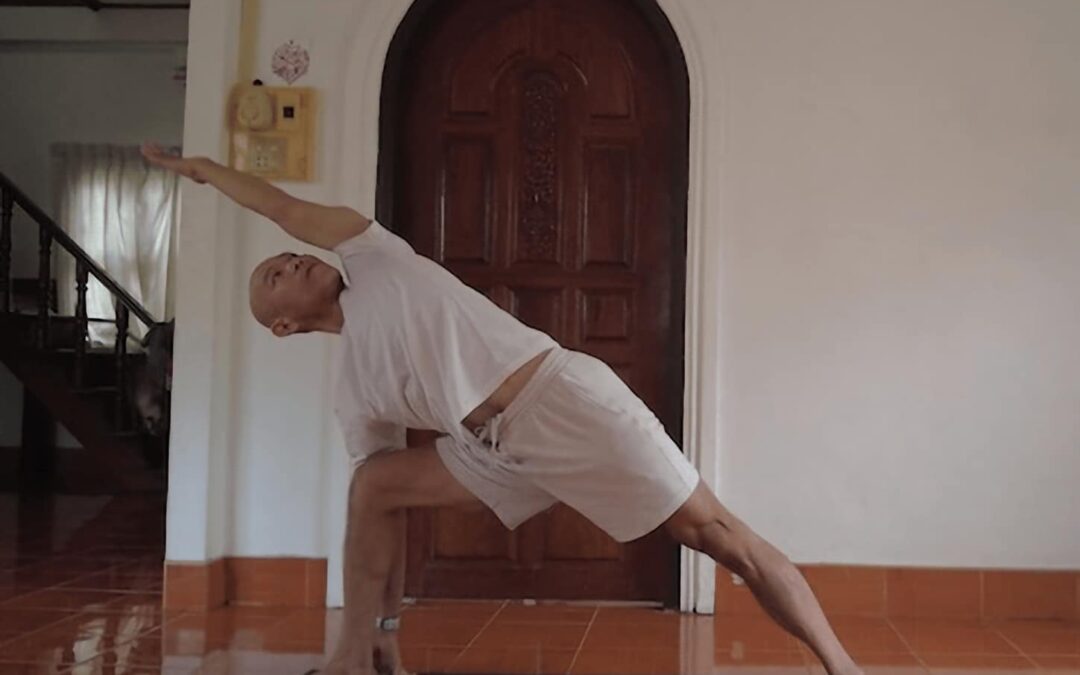
Utthita Parsvakonasana

Utthita Parsvakonasana

Utthita Parsvakonasana is a posture for opening hips, strengthening the legs and the core, stretching the side of the body, twisting and many more. You can learn how to align the body through the posture.


Basics of any standing postures

1. connect the front foot and the back foot to press each other, as you tuck the legs into the hips firmly and keep the hips stable, so it is counterbalanced and the posture should be more stable and more deepened.

2. Try to shift the weight onto the back leg as much as possible.

3. the tail bone, the spine, the neck and the head should be aligned and lengthened.

4. Engage the psoas.


As you follow the basics


1. The front foot should be straight forward, separate the feet almost a leg width apart. The back foot could be at 90 degrees against the front foot, or toes slightly inward, and align the back heel with the front foot.

2. Most common mistake could be to bring the front knee beyond the ankle or the toes. Try to keep the front knee just above the heel or the middle of the foot. So, Front shin should be vertical agaist the floor, and the front thigh should be pararell to the floor.

3. Stretch the back leg out. Both legs should be abducted and both thighs should be rotated externally. The hips should be facing sidway. Almost same alignment as in Worrier pose B.

4. Put the hand or fingers just outside of the front foot. If you cannot put the hand on the mat because of the stiff hips, Use a block. The hand or fingers could be just touching with the floor, as you put the weight on to the back leg as much as you can.

5. Align the center of the body and the arm over the head with the back leg, Stretch the side of the body, and twist the body to bring the chest up to the ceiling, look at the hand over the head.


Utthita Trikonasana

Utthita Trikonasana

Trikonasana is arguably the most iconic posture of Hatha Yoga. At first glance, the posture looks easy and anyone can try it, but it is a very deep posture. In alignment-oriented classes, it is not unusual to spend more than an hour on this posture alone.

If you understand its depth, you are thoughtful and have reached deep enough awareness, so you will improve in other postures as well. If you think this posture is easy, or you are not sure what it is actually for, or even you don’t know what you actually doing, take your time to practise it carefully so that you may realize its depth.


Basics of any standing postures

1. connect the front foot and the back foot to press each other, as you tuck the legs into the hips firmly and keep the hips stable, so it is counterbalanced and the posture should be more stable and more deepened.

2. Try to shift the weight onto the back leg as much as possible.

3. the tail bone, the spine, the neck and the head should be aligned and lengthened.

4. Engage the psoas.


As you follow the basics

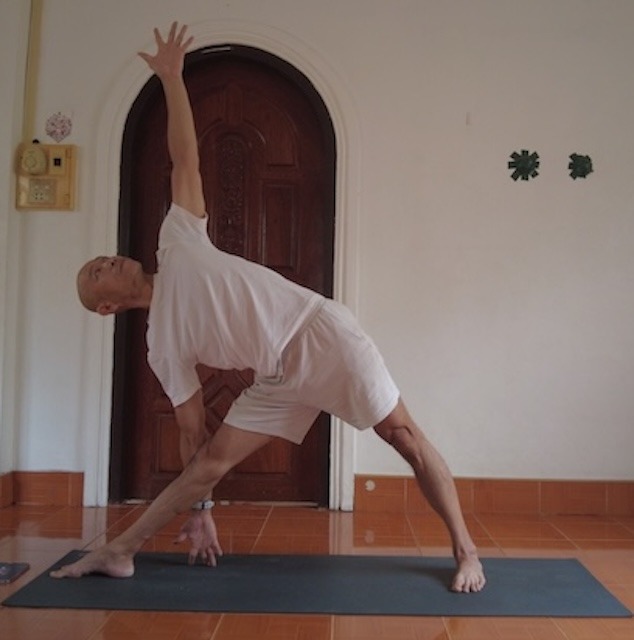
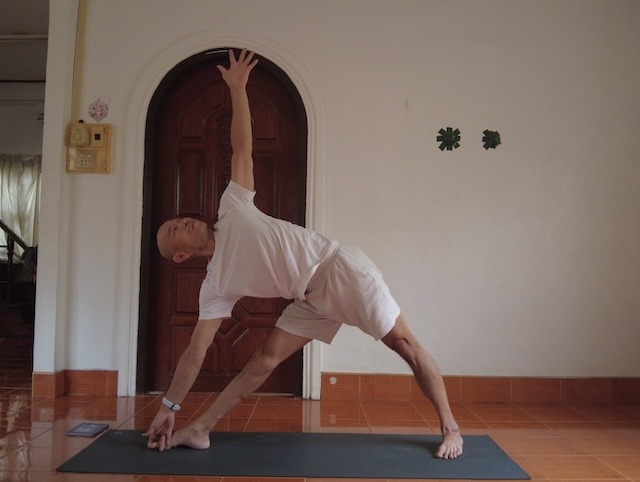
1. Separate the feet a leg width apart, Align the front foot with the middle of the back foot. The front foot should be straight forward, the back foot is 90 degrees against the front foot, or the back toe is slightly inward.

2. The front leg thigh is abducted and rotated externally. The back leg thigh is abducted and rotated externally. You can bend the front knee slightly, if the knee tends to overstretched.

3. Open the hips and keep the hips face sideways firmly.

4.  Keep the longest spine and keep the chest face sideways firmly.

5. Open the arms wider, as you keep the arms external rotated and abducted.

6. Look at the hand reaching for the ceiling.


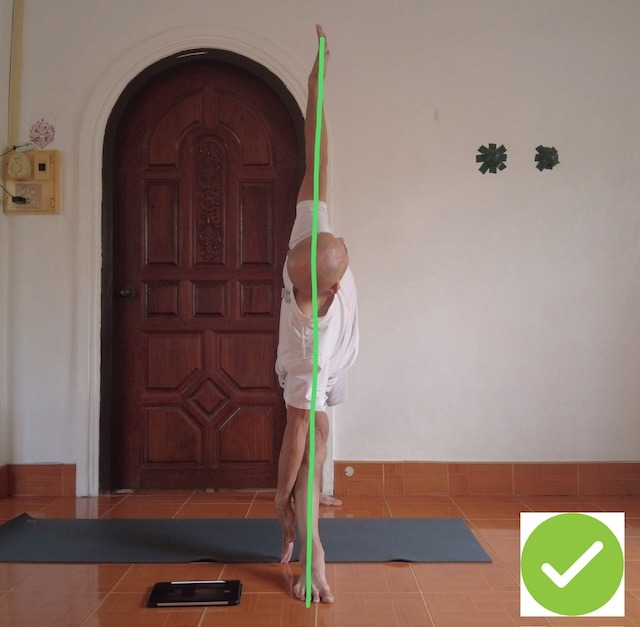
6. Make sure if the front leg, the back leg, the hips, the spine, the neck and the head on the line between the front foot and the middle of the back foot.

7. Press the head agaist the tail bone and the back foot. And keep the longest spine and the longest neck and stretch the side of the body which is close to the ceilling.